
Cressy & Everett Real Estate Blog
 RSS Feed
Subscribe and receive email notifications of new blog posts.
RSS Feed
- 2026 | 26 Posts
- 2025 | 49 Posts
- 2024 | 53 Posts
- 2023 | 48 Posts
- 2022 | 48 Posts
- 2021 | 49 Posts
- 2020 | 48 Posts
- 2019 | 48 Posts
- 2018 | 54 Posts
- 2017 | 51 Posts
- 2016 | 14 Posts
- 2015 | 11 Posts
- 2014 | 21 Posts
- 2013 | 3 Posts
Baroda, MI | 6 Posts
Benton Harbor MI | 7 Posts
Berrien County | 9 Posts
Bristol, IN | 1 Posts
Buying a Home | 83 Posts
Career Opportunities | 4 Posts
Community | 4 Posts
Company News | 13 Posts
Cressy & Everett | 16 Posts
Elkhart IN | 5 Posts
First-time Buyers | 3 Posts
Giving Back | 4 Posts
Goshen IN | 3 Posts
Harbor Country, MI | 2 Posts
Home Improvement | 39 Posts
Home Loans | 2 Posts
Home Safety | 1 Posts
Homeownership | 53 Posts
Michiana | 41 Posts
Michigan Homes for Sale | 1 Posts
Nappanee IN | 4 Posts
Niles, MI | 1 Posts
Real Estate Professionals | 2 Posts
Saint Joseph MI | 24 Posts
Selling Your Home | 54 Posts
Senior Buyers | 1 Posts
South Bend IN | 105 Posts
Sturgis MI | 1 Posts
Top Agents | 2 Posts
Uncategorized | 4 Posts
Welcome New Realtors | 36 Posts
April
17
17
A Guide For Finishing Your Basement
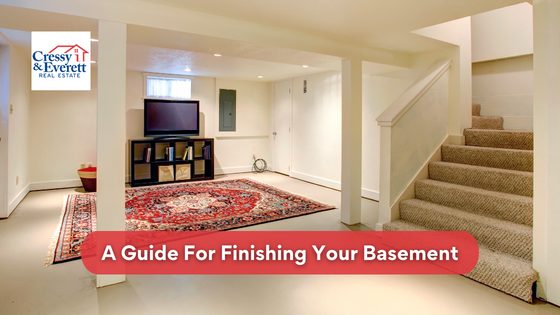
Finishing your basement can add to the square footage of your home, increase its value, and pay off your investment in the long run. If you've been considering finishing your basement, check out this guide from our real estate agents.
- Eliminate any leaks.
First things first: Make sure your basement isn't damp or leaking, as that will only ruin your hard work to finish it. A moisture test will help you identify any leaks. Check for cracks in the floor and walls, and on the house's exterior, make sure your gutters, downspouts, and landscaping are all directing water away from the house. Adding a waterproof coating on all exposed concrete inside the basement will also help prevent leaks from developing in the future. - Research permits and local regulations.
Before you start planning how to refinish your basement, it's a good idea to look into what permits you'll need and how local regulations will impact your plans. For instance, you may need to observe certain ceiling height or window size rules. Remember that some of these regulations may impact whether you can finish your basement yourself. - Plan your layout.
Before you start working on your basement, you'll need to know the layout. Designing the basement layout in advance will help prevent any novice mishaps, such as carpet running underneath the walls. It will also ensure you accommodate any systems that run through the walls or ceiling, such as HVAC and electrical. If you browse South Bend homes for sale with finished basements, you'll see a common layout of one or two bedrooms and a bathroom accessible from a central media or family room. - Build the subfloor (optional).
Before you start constructing walls, take a moment to consider whether you want a subfloor in your basement, as the subfloor should go in before the walls. Subflooring will make your basement floor feel a little more forgiving than if you're walking around on carpet, laminate, or tile glued directly onto the concrete. Because it provides a layer of insulation, it'll also help prevent the floor from feeling as cold and unwelcoming in the winter. If you want your basement to feel professionally finished, you'll likely want a subfloor. - Add walls, ceiling, and flooring.
Once the subfloor is in place, you'll start building the walls and ceiling from the inside out. This means framing the walls and ceiling first, then adding HVAC, electrical, and insulation before finishing with drywall and trim. Once the framing is built, you can also add flooring. Whether your flooring will be carpet, laminate, or tile, waiting until the walls are in place will ensure the flooring doesn't run underneath the walls. - Work with a professional as needed.
Finishing your basement is a big project that involves many different areas of expertise. Don't feel bad if you don't have some or all of the necessary skills for finishing your basement. When done right, finishing your basement can add to your home's value, so it's important to be honest with yourself about your skill level. This may mean anything from calling in the professionals just for specific tasks such as running HVAC and electricity to hiring someone to oversee the entire project from beginning to end.
Finishing your basement adds to your home's square footage, desirability, and value, so it's a popular project for homeowners. For more information about how finishing your basement will help you sell your South Bend home faster, contact us today.


Note: a subscription to the Do Not Call list does not apply when requesting information from our company.

This site is hosted, designed and copyright
© 1994 - 2026 by
Delta Media Group, Inc. -- Patent Pending --
Agency License Information: Cressy & Everett Real Estate is licensed in the states of Indiana and Michigan.